Genesis, Cush & Egypt: The Black Presence in the Bible
The Bible is not a floating book of religious ideas. It is God-breathed revelation set in real lands, among real peoples, across real generations. Rivers, kingdoms, tribes, cities, and empires matter because the Holy Spirit chose to include them. Genesis 10 is not filler between famous stories; it is an inspired record of how nations, peoples, territories, and identities developed under the sovereign hand of God.
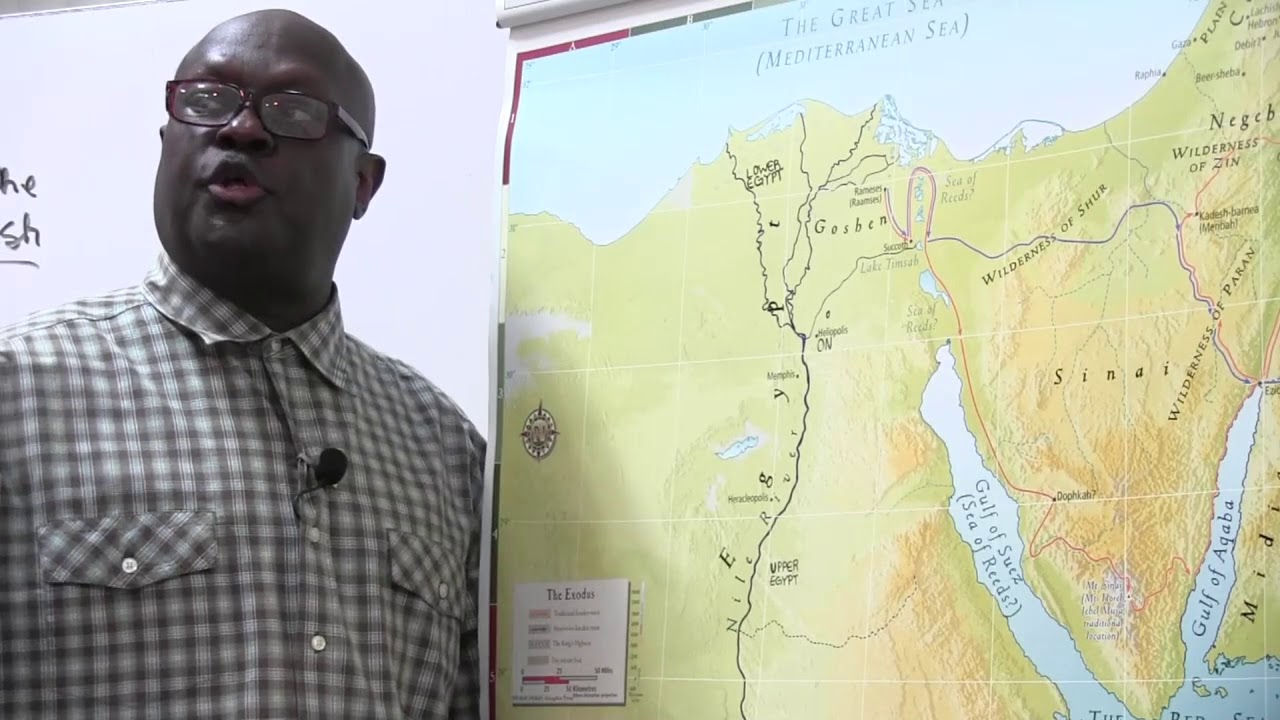
That matters deeply when studying Cush, Mizraim, Egypt, and the Black presence in Scripture. Egypt is not a minor backdrop to the biblical story. It shaped Israel’s history, appears repeatedly in redemptive history, and even becomes part of the early earthly life of Christ. To read Scripture responsibly, Egypt and Cush must be seen not as vague symbols only, but as historical nations in Africa with profound theological significance.
Genesis 10: God’s Inspired Record of Nations
Genesis 10 is often called the Table of Nations. It traces the descendants of Noah’s sons and shows how the post-flood world developed into peoples, clans, languages, lands, and kingdoms. This is not merely ancient genealogy; it is inspired Scripture.
“And the sons of Ham; Cush, and Mizraim, and Phut, and Canaan.” — Genesis 10:6
This verse is foundational. Ham’s descendants include Cush and Mizraim. Cush is commonly associated with regions south of Egypt, often rendered “Ethiopia” in older English usage and connected with Black African peoples. Mizraim is the Hebrew name commonly translated “Egypt.” From the opening pages of post-flood history, Scripture places African peoples and nations at the center of biblical geography.
Genesis also mentions Cush before Genesis 10:
“And the name of the second river is Gihon: the same is it that compasseth the whole land of Ethiopia.” — Genesis 2:13
The biblical world is not colorless, placeless, or culturally blank. The land, rivers, and peoples named in Genesis establish a world where Africa is not peripheral. It is present from the beginning.
The descendants of Cush are also listed:
“And the sons of Cush; Seba, and Havilah, and Sabtah, and Raamah, and Sabtechah: and the sons of Raamah; Sheba, and Dedan.” — Genesis 10:7
And from Cush comes Nimrod, whose kingdom-building is connected to Babel and other cities:
“And Cush begat Nimrod: he began to be a mighty one in the earth. He was a mighty hunter before the LORD: wherefore it is said, Even as Nimrod the mighty hunter before the LORD. And the beginning of his kingdom was Babel, and Erech, and Accad, and Calneh, in the land of Shinar. Out of that land went forth Asshur, and builded Nineveh, and the city Rehoboth, and Calah, And Resen between Nineveh and Calah: the same is a great city.” — Genesis 10:8-12
Genesis 10 is therefore not only genealogy; it is the beginning of world history after the flood. Kingdoms rise, peoples spread, cities form, and God remains Lord over all.
Mizraim, Egypt, and the Development of Peoples
Genesis 10 also gives special attention to Mizraim, or Egypt:
“And Mizraim begat Ludim, and Anamim, and Lehabim, and Naphtuhim, And Pathrusim, and Casluhim, (out of whom came Philistim,) and Caphtorim.” — Genesis 10:13-14
The phrase “begat” or “became the father of” does more than identify one individual parent. In genealogies like this, it often describes the development of peoples, tribes, and nations. These names point to ethnic and geographic origins, showing how communities emerged over time.
This also helps explain why historical geography matters. The Bible’s mention of Egypt, Canaan, Philistia, Babylon, Assyria, and surrounding regions is not decorative. These places form the stage on which God reveals His covenant purposes, judges nations, preserves His people, and fulfills prophecy.
The reference to the Philistines in Genesis 10:14 also helps connect later biblical events to earlier national origins. When David later encounters Goliath, Scripture identifies him as a Philistine:
“And as he talked with them, behold, there came up the champion, the Philistine of Gath, Goliath by name, out of the armies of the Philistines, and spake according to the same words: and David heard them.” — 1 Samuel 17:23
Biblical interpretation becomes richer when later events are read in light of earlier inspired records. Scripture interprets Scripture, and the Bible’s genealogies help explain the peoples who appear later in redemptive history.
Scripture Must Govern Interpretation
The study of nations, ethnicity, and history can easily be distorted by pride, politics, or modern assumptions. That is why Scripture must remain the final authority. The Bible is not to be handled as raw material for private theories. It is God’s Word, given by the Spirit, sufficient to teach truth and correct error.
“All scripture is given by inspiration of God, and is profitable for doctrine, for reproof, for correction, for instruction in righteousness: That the man of God may be perfect, throughly furnished unto all good works.” — 2 Timothy 3:16-17
“Knowing this first, that no prophecy of the scripture is of any private interpretation. For the prophecy came not in old time by the will of man: but holy men of God spake as they were moved by the Holy Ghost.” — 2 Peter 1:20-21
This is a deeply Reformed conviction: God speaks with authority, and human interpretation must submit to His revealed Word. Scripture is not inspired because readers find it meaningful; it is meaningful because it is inspired. The Spirit who gave the Word also teaches the church to read it with reverence, humility, and care.
That humility includes examining the heart. The issue is never information alone. The condition of the heart shapes how truth is received.
“A good man out of the good treasure of the heart bringeth forth good things: and an evil man out of the evil treasure bringeth forth evil things.” — Matthew 12:35
“For to be carnally minded is death; but to be spiritually minded is life and peace. Because the carnal mind is enmity against God: for it is not subject to the law of God, neither indeed can be.” — Romans 8:6-7
A spiritual mind receives Scripture as God’s Word. A carnal mind bends Scripture toward self-rule. This is why biblical study requires both careful reading and humble dependence on God.
Egypt in the Life of Israel and Christ
Egypt is one of the most important nations in the Bible. It is a place of refuge, oppression, judgment, temptation, and providence. Israel’s story cannot be told without Egypt. The same is true, in a striking way, of the earthly life of Jesus.
“And when they were departed, behold, the angel of the Lord appeareth to Joseph in a dream, saying, Arise, and take the young child and his mother, and flee into Egypt, and be thou there until I bring thee word: for Herod will seek the young child to destroy him. When he arose, he took the young child and his mother by night, and departed into Egypt: And was there until the death of Herod: that it might be fulfilled which was spoken of the Lord by the prophet, saying, Out of Egypt have I called my son. Then Herod, when he saw that he was mocked of the wise men, was exceeding wroth... Then was fulfilled that which was spoken by Jeremy the prophet... But when Herod was dead, behold, an angel of the Lord appeareth in a dream to Joseph in Egypt.” — Matthew 2:13-19
God sent His Son into Egypt and brought Him out again in fulfillment of prophecy. Egypt was not accidental scenery. It was part of the Father’s sovereign plan.
This reveals a central truth: God governs the movements of nations and individuals. He raises up peoples, establishes boundaries, brings people into particular places, and removes them according to His purpose. Even when human rulers rage, God’s providence stands.
Job speaks of this divine rule over creation and human life:
“The tabernacles of robbers prosper, and they that provoke God are secure; into whose hand God bringeth abundantly. But ask now the beasts, and they shall teach thee; and the fowls of the air, and they shall tell thee... Who knoweth not in all these that the hand of the LORD hath wrought this? In whose hand is the soul of every living thing, and the breath of all mankind.” — Job 12:6-10
Every nation, every empire, every migration, every rise and fall exists under the hand of the Lord. That does not excuse evil. It does mean history is never outside God’s rule.
Key Takeaways
- Genesis 10 is an inspired record of the development of peoples, nations, tribes, and territories.
- Cush and Mizraim are descendants of Ham and are crucial for understanding the Black and African presence in Scripture.
- Egypt is an African nation with major significance in Israel’s history and in the life of Christ.
- The phrase “became the father of” points to the continuing development of peoples and nations, not merely isolated individuals.
- Scripture must interpret Scripture; biblical history should not be reshaped by private interpretation or modern prejudice.
- God is sovereign over nations, geography, history, and the people He brings into and removes from individual lives.
Historical geography is not a distraction from theology. It is one of the ways God teaches theology. To study Cush, Mizraim, Egypt, Canaan, Babylon, and the surrounding lands is to honor the actual world in which God revealed His Word. Let Scripture expand the imagination, correct inherited assumptions, and deepen confidence in divine providence. The God who governed the nations in Genesis still governs history today, and His Word remains trustworthy from beginning to end.