
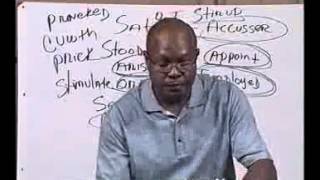
Who Is Satan? The Created Adversary Under God’s Sovereignty
Satan is often imagined as a dark counterpart to God, a nearly equal power locked in cosmic competition with the Creator. Scripture gives a very different picture. Satan is real, dangerous, deceptive, and destructive—but he is not sovereign. He is not eternal. He is not a god. He is a creature.
The Bible presents Satan as the adversary, the accuser, and the enemy of good. Yet even in his rebellion, he remains under the rule of the Lord who made all things and governs all things. That truth does not make evil harmless, but it does keep fear from becoming lord over the heart. Satan can tempt, accuse, seduce, and deceive; he cannot overthrow God’s purpose.
To understand Satan biblically, the passages most often discussed are Ezekiel 28:1-18 and Isaiah 14:1-17. Both texts speak directly to proud earthly rulers, yet they also reveal a deeper pattern of satanic pride: beauty corrupted into arrogance, wisdom twisted into self-exaltation, and creaturely dependence denied in the pursuit of divine status.
Satan Is the Adversary, Not a Rival God
The name “Satan” carries the idea of an adversary or accuser. He opposes God’s people, resists God’s truth, and seeks to distort God’s goodness. But opposition is not equality. Scripture never presents Satan as God’s opposite in power. God has no opposite.
Everything that exists outside God exists because God created it. Christ is supreme over all creation, including invisible powers.
“For by him were all things created, that are in heaven, and that are in earth, visible and invisible… all things were created by him, and for him: and he is before all things, and by him all things consist.” — Colossians 1:15-18
This means Satan’s existence is dependent. His power is limited. His activity is governed. He is not free in the ultimate sense; only God is absolutely sovereign.
Even the wicked serve God’s final purpose, though they remain morally responsible for their evil.
“The LORD hath made all things for himself: yea, even the wicked for the day of evil.” — Proverbs 16:4
That doctrine may be difficult, but it is deeply stabilizing. Evil is not outside God’s rule. Satan is not improvising history while God reacts. The Lord declares the end from the beginning, and no creature can frustrate His counsel.
“I am God, and there is none else; I am God, and there is none like me, declaring the end from the beginning…” — Isaiah 46:9-10
Biblical faith does not deny spiritual danger. It denies satanic sovereignty.
Pride: The Root of Satanic Rebellion
Ezekiel 28 addresses the prince and king of Tyre, a ruler whose heart was lifted up because of wealth, beauty, wisdom, and power. Yet the language rises beyond ordinary kingship and has often been understood as revealing the deeper spiritual pattern associated with Satan’s fall.
“Because thine heart is lifted up, and thou hast said, I am a God… yet thou art a man, and not God, though thou set thine heart as the heart of God.” — Ezekiel 28:1-18
The central issue is pride: the creature looking at gifts received from God and treating them as self-generated glory. Wisdom becomes corrupted. Beauty becomes a mirror for self-worship. Status becomes a throne.
Ezekiel continues:
“Thou sealest up the sum, full of wisdom, and perfect in beauty… Thou wast perfect in thy ways from the day that thou wast created, till iniquity was found in thee… Thine heart was lifted up because of thy beauty, thou hast corrupted thy wisdom by reason of thy brightness.” — Ezekiel 28:1-18
Notice the repeated emphasis: created, beautiful, wise, lifted up, corrupted. Satan’s evil did not come from weakness but from self-exaltation. The creature refused creatureliness. Dependence on God was despised. Giftedness became an occasion for rebellion.
Isaiah 14 gives the same pattern in the language of ascent. The king of Babylon is mocked for his arrogance, yet the words expose the spiritual logic of satanic ambition.
“How art thou fallen from heaven, O Lucifer, son of the morning!… For thou hast said in thine heart, I will ascend into heaven, I will exalt my throne above the stars of God… I will be like the most High. Yet thou shalt be brought down to hell, to the sides of the pit.” — Isaiah 14:1-17
The repeated “I will” is the heartbeat of rebellion. “I will ascend.” “I will exalt.” “I will be like the Most High.” Sin begins when the creature desires the Creator’s place.
That is not only Satan’s pattern. It is humanity’s temptation as well.
The Human Mirror: Self-Exaltation in Everyday Life
Satanic pride does not always look openly demonic. Sometimes it looks respectable, successful, productive, and religious. It can appear as confidence without gratitude, achievement without humility, or wealth without worship.
Jesus’ parable of the rich fool exposes this same spirit of self-ownership.
“The ground of a certain rich man brought forth plentifully… And he said, This will I do: I will pull down my barns, and build greater… And I will say to my soul… take thine ease, eat, drink, and be merry. But God said unto him, Thou fool, this night thy soul shall be required of thee.” — Luke 12:16-21
The man’s sin was not that his ground produced plenty. The sin was that he interpreted abundance without reference to God. His language was full of “my fruits,” “my goods,” “my barns,” “my soul.” He received everything as though he owed thanks for nothing.
Scripture cuts through that illusion:
“For who maketh thee to differ from another? and what hast thou that thou didst not receive?” — 1 Corinthians 4:7
Every ability, opportunity, possession, intellect, and breath is received. Nothing good is self-created. That does not erase human responsibility or effort; it puts both in their proper place. Diligence matters, but God gives the mind, strength, time, and providence by which diligence bears fruit.
Hannah’s prayer says this plainly:
“The LORD killeth, and maketh alive: he bringeth down to the grave, and bringeth up. The LORD maketh poor, and maketh rich: he bringeth low, and lifteth up.” — 1 Samuel 2:1-7
This is the opposite of satanic pride. Pride says, “I have made myself.” Faith says, “All has been received from the Lord.”
The Need for a Circumcised Heart
The teaching of Scripture is not merely that Satan is proud, but that human beings must be delivered from the same fleshly pattern. Pride is not only an angelic disaster; it is a human disease.
Jeremiah describes the need for inward cleansing with the language of circumcision of the heart.
“Circumcise yourselves to the LORD, and take away the foreskins of your heart… lest my fury come forth like fire, and burn that none can quench it, because of the evil of your doings.” — Jeremiah 4:4
An uncircumcised heart is a heart still ruled by fleshly thinking—self-reliance, self-glory, self-rule. It may be intelligent, gifted, powerful, and religious, but it remains spiritually blind if it refuses dependence on God.
This is why pride is so deadly. It does not merely break a rule; it rejects reality. God is Creator. The creature is dependent. To deny that dependence is to live in falsehood.
James contrasts earthly wisdom with heavenly wisdom:
“If ye have bitter envying and strife in your hearts, glory not… This wisdom descendeth not from above, but is earthly, sensual, devilish.” — James 3:14-17
Devilish wisdom is not always irrational. It may be strategic, impressive, and persuasive. But it is “earthly” and “sensual” because it is cut off from humble submission to God.
Satan’s Judgment Is Certain
Satan’s pride ends in humiliation. The proud ruler in Isaiah is brought down. The exalted figure in Ezekiel is cast down. The one who desired the heights is assigned the pit.
“Yet thou shalt be brought down to hell, to the sides of the pit. They that see thee shall narrowly look upon thee… saying, Is this the man that made the earth to tremble?” — Isaiah 14:1-17
Evil often looks powerful before judgment arrives. Babylon feasted. Tyre boasted. The rich fool planned for many years. But God’s sentence exposes the fragility of every proud throne.
Daniel 5 gives a vivid picture of this collapse. Belshazzar used holy vessels for profane celebration, praising false gods while ignoring the living God.
“In the same hour came forth fingers of a man’s hand, and wrote… upon the plaister of the wall of the king’s palace… Then the king’s countenance was changed, and his thoughts troubled him.” — Daniel 5:1-8
Pride can laugh until God writes on the wall. Human kingdoms, satanic schemes, and self-made identities all fall before the Lord’s decree.
For this reason, the believer does not need to live in terror of Satan or man. Confidence rests not in human strength, but in God’s presence and promise.
“I will never leave thee, nor forsake thee. So that ye may boldly say, The Lord is my helper, and I will not fear what man shall do unto me.” — Hebrews 13:5-6
Key Takeaways
- Satan is the adversary and accuser, but he is not equal with God.
- Satan is a created being whose power remains limited by divine sovereignty.
- The root of satanic rebellion is pride: the creature seeking the Creator’s place.
- Human self-exaltation mirrors the same spirit when gifts from God are treated as personal glory.
- True wisdom begins with dependence on God, not confidence in beauty, intellect, wealth, or status.
- Satan’s judgment is certain, and all proud rebellion against God will be brought low.
The practical call is simple and searching: reject the illusion of self-made life. Give thanks for every gift. Hold possessions loosely. Use strength, wisdom, and opportunity in service to God rather than self-exaltation. Ask the Lord for a circumcised heart—one that thinks spiritually, depends humbly, and worships truthfully.
Satan’s pride ends in ruin, but humble dependence on God leads to life. The narrow way is not the path of self-glory; it is the path of trust, gratitude, and surrender before the Most High.